JEC Webinar Programme - September to December



We are pleased to announce that the KUSA Office has commenced with the process of transitioning to the new KUSA Online Portal, for the processing of applications submitted via email to the KUSA Office. Applications submitted on or after 1 September 2026 will be processed via the new portal if the application falls within one of the following categories:
*Membership Applications (New & Renewals)
*Litter Registration Applications
*Single Dog Registration Applications (Imports, Dogsport Register, Export Pedigrees)
*Affix (Kennel Name) Applications (New & Renewals)
*Transfer of Ownership
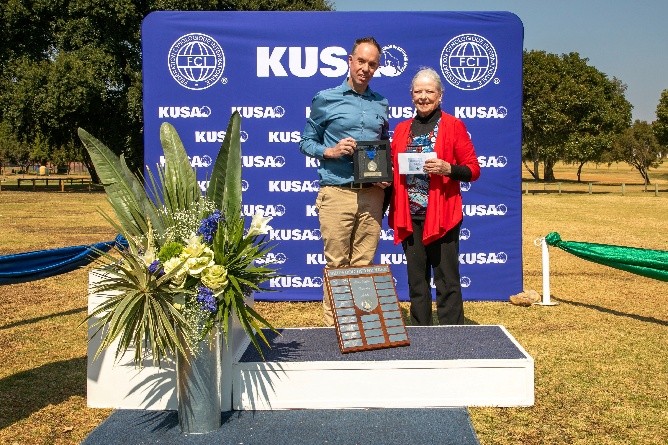
KUSA SHOWDOG OF THE YEAR 2026
GR.CH BURQA DI GUCCI AT WHITE SQUALL (IMP ITA) JW (UK), ZAW'25, NAT.HOUND '25'26, NAT.BREED '25'26
(OWNER: MR L KRUGER)
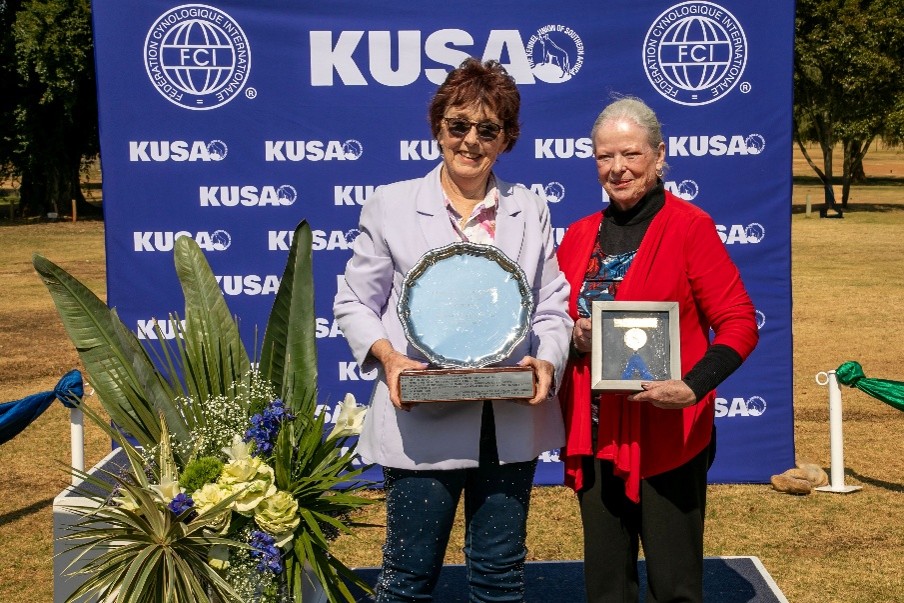
KUSA TOY & BOS SHOWDOG OF THE YEAR 2026
GR.CH, FCI-C.I.B-J, PL.CH, ROM.CH AMBER BEAUTY SUNNY BOY FOR KRESCENDO (IMP POL) ZAW'25'26, NAT.TOY '25, NAT.BREED '24'25'26
(OWNER: Ms N ANDERSON)
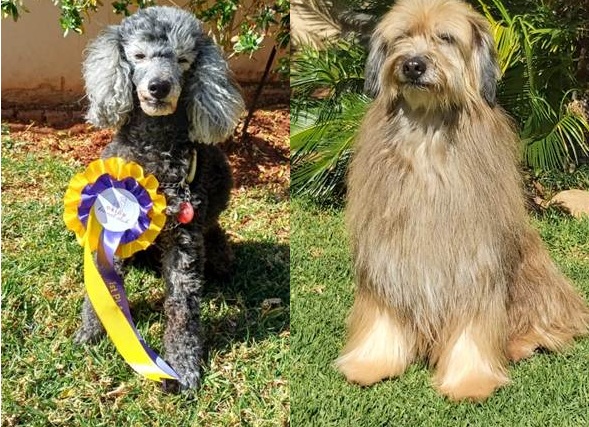
Hoopers, the newest of the KUSA Dogsport offerings, saw the first two participants receiving their third Qualifying Certificate (QC) this weekend making them eligible to apply for the title of CHAMPION.
On Saturday 18.06.2026, Carol Staughton and her 12.5 yr old Toy Poodle Yogi earned his third QC, followed on Sunday 19.06.2026 by Shelley-Anne van Schalkwyk and her 12 yr old Pyrenean Sheepdog Aneou earning his third QC.
Congratulations to these two seniors who have been showing the youngsters what the showring is all about.
Dear Madam or Sir,
We have the pleasure of informing you that the results of the ABOVE FCI International CACIAG dog show have been confirmed.
The official list of results confirmed is available on http://www.fci.be/en/results/IB.aspx and the CACIAG can be printed ONLINE by the owners.
A detailed list of the CACIAG confirmed (sorted by catalogue number) is enclosed for your convenience
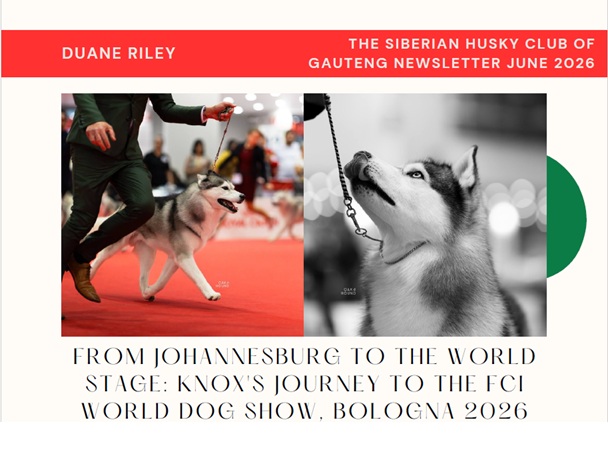
There are dreams you dare to dream, and then there are the ones you never even allow yourself to consider.
For us, representing South Africa at the FCI World Dog Show in Bologna, Italy, fell firmly into that second category —
until it didn't.
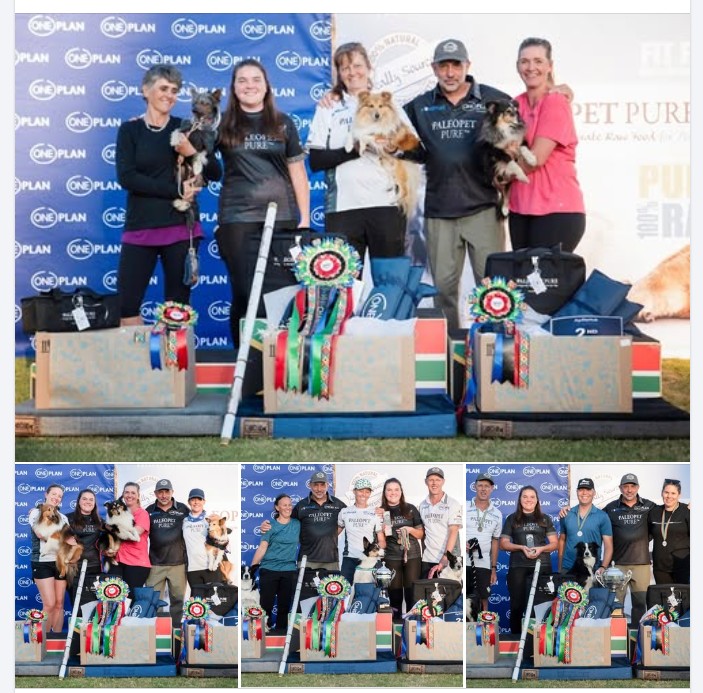
Judges: Mr Robbie de Jongh (NLD) & Mr Jean Luc Stapelberg (SA - Reserve Judge)
Winner: Lisa Prestwood & Céline Dion Is Always Crazy
CONGRATULATIONS to the winners of the Agility (Contact) KUSA Nationals 2026
Judge: Tam White
Agility (Contact): Medium – Liv Engelbrecht & Dobby
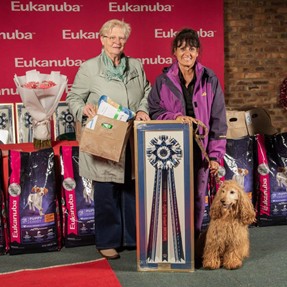
CONGRATULATIONS to the winners of the Dog Dancing KUSA Nationals 2026
Judge: Shelley-Anne van Schalkwyk
Musical Freestyle: Advanced Veterans
Dawn Crawshaw & Dollar

Musical Freestyle: Advanced Singles
Dawn Crawshaw & Parker


Thursday, 16 April 2026
It is with delight that the Federal Council of KUSA and the KUSA Office are able to inform the members of the American Bully community that, after a period of discussions and negotiations with representatives of the American Bully collective of owners and breeders, KUSA shall, as from 1 May 2026, accept voluntary applications from owners and breeders of American Bullies (Pocket) and American Bullies (Standard) to register their dogs on KUSA’s Breed Appendix Register.
The above milestone has been reached after persistent appeals from members of the American Bully community to register, or dual register, their dogs with KUSA, even though American Bullies are not (yet) a recognised breed under the Fédération Cynologique Internationale (FCI). To reach this point, KUSA obviously had to engage extensively with the FCI and FCI National Canine Organisations (NCOs), which had succeeded in accommodating American Bullies on their Appendix Registers by availing themselves of certain FCI flexibilities afforded to member countries.

We have the pleasure of informing you that the results of the ABOVE FCI International CACIB dog show have been confirmed.
The official list of results confirmed is available on http://www.fci.be/en/results/IB.aspx and the CACIB can be printed ONLINE by the owners.
A detailed list of the CACIB confirmed (sorted by catalogue number) is enclosed for your convenience.
We are pleased to announce the members of the Federal Council. We congratulate them on their appointments and wish them every success, with full confidence in their capable and committed leadership.

We are pleased to announce the members of the Executive Committee who will serve for the 01.01.2026 to 31.12.2029 term of office. We congratulate them on their appointments and wish them every success, with full confidence in their capable and committed leadership.


We are pleased to announce that, after 4 years of dealing with all matters related to Club Affairs, Claire Patterson-Abrolat has accepted a new position within the Organisation, that of Communications & Public Relations Lead.
Claire’s appointment is aligned with the Federal Council’s recognition of the membership’s continuing appeal for more frequent and regular communication pertaining to the broad spectrum of activities regulated by the Organisation and the operational functions it routinely performs.
IMPORTANT NOTICE TO KUSA MEMBERS WHO USE THE KUSA ONLINE MEMBERS’ PORTAL TO SUBMIT ONLINE APPLICATIONS FOR MEMBERSHIP RENEWALS, AFFIX RENEWALS AND DOG/LITTER REGISTRATIONS.
As a result of an unforeseen development, the processing of Credit Card payments for online applications via the Members’ Portal will be terminated at the end of October 2025. Following a buy-out of the business, the payment gateway Service Provider for KUSA’s online transactions has given its customers 30-day notice of termination of service.
The sudden loss of the payment gateway service, currently integrated into both the existing Members’ Portal and the new portal under development, is not only a significant setback, but also presents technological challenges which are impossible to resolve in the short term. After careful consideration, the Federal Council ultimately endorsed the KUSA Office’s recommendation that the new payment gateway technology only be integrated into the new portal. Retrofitting it to the old Members’ Portal, that has reached the end of its shelf-life, would be an unnecessary costly expense and would hamper and constrain the progress being made with the development of the future platform.
Users of the current Members’ Portal are hereby advised, that as from 31 October 2025 members will no longer have access to the links to submit online applications for services like Membership Renewal, Affix Applications, Litter Registration Applications and Single Dog Registration Applications.
Until further notice, Members are requested to submit their duly completed and signed application forms to the KUSA Office, via email, at This email address is being protected from spambots. You need JavaScript enabled to view it. This should be done in one email with all supporting documentation attached, including proof of payment for all fees due.
For the Urgent Attention of:
Licensed & Learner Judges of Breed and Dogsport
IMPORTANT NOTICE TO JUDGES LICENSED BY KUSA PERTAINING TO THEIR ACCEPTANCE OF JUDGING APPOINTMENTS IN FOREIGN COUNTRIES
It is necessary to bring to your urgent attention three amendments to KUSA Schedules which affect Judges who intend accepting invitations to judge in foreign countries. The amendments to the KUSA Regulations were fully motivated and approved at a Special Meeting of the Federal Council held on Monday, 25 August, of which Minutes are available on the KUSA website on the following link:
The following three amendments have relevance:
Amendment One:
SCHEDULE 10 – REGULATIONS – KUSA BREED JUDGES’ LEARNING PROGRAMME
Effective 01.01.2026
Regulation 5
Insert new Regulations 5.1 & 5.2, elimination of former Regulations 5.3, 5.4 & 5.6, and renumbering former Regulation 5.6 as Regulation 5.3, slightly amended.
IMPORTANT NOTICE
AMENDMENTS TO THE REGULATIONS FOR REGISTRATION OF IMPORTED DOGS
EFFECTIVE 01.10.2025
We bring to your attention amendments to the Regulations for the registration of imported dogs that come into effect on 1 October 2025.
Additional supporting documentation* will be required to be attached to the application form. Application for Registration of a Single Dog – BREED Register – version Oct 2025, will be the only application form accepted.


DNA PROFILES and
ARTIFICIAL INSEMINATIONS USING FROZEN SEMEN
Some concern has been expressed recently that DNA Profiles are required for foreign sires whose frozen semen is used in artificial inseminations.
Please be advised that KUSA does NOT require DNA Profiles of sires used in frozen semen Artificial Inseminations, irrespective of the date the semen was collected, provided it is a single sire breeding.
Dual sire breedings whether natural matings or frozen semen always require parentage testing of all puppies using DNA profiles of both possible sires.
DNA PROFILES and
ARTIFICIAL INSEMINATIONS using IMPORTED FROZEN SEMEN
Some concern has been expressed recently that DNA Profiles are required from foreign donor sires for artificial inseminations.
Agenda Item 17.5 Cropped and docked dogs: 11 breeds for which the Breed Standard has been changed.
Simply put, the FCI Circular 57/2021, which came into effect on 01.01.2025, has been put on hold with immediate effect. This Circular provided as follows:
“FCI Circular 57/2021 - CROPPED/DOCKED DOGS OF BREEDS CUSTOMARILY CROPPED/DOCKED REMINDER
On the occasion of its online meeting on November 24, 2021, the FCI General Committee decided to remind the FCI Members and Contract Partners about the circular 8/2016 (dated 7/3/2016) referring to cropped/docked dogs of breeds customarily cropped/docked.
The FCI General Committee insists that, effective from 1st January 2025, the dogs with cropped ears/docked tail, belonging to breeds for which no reference is made to the cropped ears/docked tail in the FCI breed standards, will not be allowed anymore to be shown in any conformation event where the FCI breed standards are used.
KUSA takes pleasure in sharing the FCI publication “The Importance & Benefits of Dog Breeds” (Mr Attila Márton) that highlights the various aspects of the importance and benefits of dog breeds throughout the world.
The Department of Agriculture (formerly DALRRD) has published updated
GUIDELINES ON REGISTRATION OF IMPORT/EXPORT AGENTS AND IMPORTATION AND EXPORTATION OF DOGS
We draw you attention to Part 3: (4) which has been revised to read as follows:
1) All dogs imported to South Africa are mandated to be sterilized if they are going to be used for other purposes other than breeding or they must be pre-approved by AIA registered registering authorities if they are imported to be used as breeding
Declared companion dogs (not meant for breeding) imported to South Africa permanently must be sterilized and are prohibited to be imported if they are less than 8 months old.
a) Dogs imported to South Africa temporarily for certain purposes (e.g. vacation) should be sterilized temporarily using chemical castration and proof (preferably from a State Veterinarian) of such must be provided.

IMPORTANT ANNOUNCEMENT
KUSA AFFIX (KENNEL NAME) REGISTRATION
MANDATORY SIMULTANEOUS REGISTRATION ON FCI INTERNATIONAL KENNEL NAME REGISTER
We are pleased to inform KUSA members with registered KUSA Affixes (Kennel Names) of a new and exciting development that will enhance the status of KUSA Affixes internationally and protect KUSA Affixes from possible duplication, exploitation and expropriation in FCI member countries.
CLARITY ON ANIMAL IMPROVEMENT ACT PERMITS FOR DOGS LEAVING SOUTH AFRICA AND RETURNING
Following an enquiry from the KUSA Office, the Department of Agriculture, Land Reform & Rural Development (DALRRD) has clarified the uncertainty surrounding AIA Export/Import Permits for South African dogs travelling to attend Shows held in neighbouring countries, or abroad, and thereafter returning to the RSA.
Dogs travelling on either INTER-TERRITORIAL MOVEMENT PERMITS or PERMITS TO TRAVEL FOR RECREATIONAL PURPOSES, are also required to apply to DALRRD for an Import/Export Permit, as required under the Animal Improvement Act, using the Application to Import/Export Animals for Certain Purposes form.
· The AIA Import/Export Permit will cover both the exit from and re-entry to South Africa.
· The AIA Permit must be applied for first and then submitted, in conjunction with and attached to, the application for the Veterinary Permits.
· The AIA Permit is required in addition to the usual Veterinary Permits/Inter-Territorial Permits.
· The current cost of the AIA Import/Export Permit is R460.00 payable to DALRRD.
· An AIA Import/Export Permit can cover multiple dogs (it is not necessary to obtain one permit per dog).
KUSA STATEMENT on the DALRRD’S DIRECTIVE WITH REGARD TO THE IMPORTATION OF DOGS INTO SOUTH AFRICA
On 13 March 2024, the Department of Agriculture, Land Reform and Rural Development (DALRRD) issued a directive that, with effect from 1 April 2024, all applications for Veterinary Import Permits must be accompanied by a confirmation of compliance with the Animal Improvement Act No. 62 of 1998 (AIA) issued by the Registrar of Animal Improvement in the DALRRD. This directive seeks to enforce the provisions of section 16 of the AIA and does not only apply to production animals, but also to dogs.
Earlier this year, KUSA reported on the judgement handed down by the District Court in Dortmund, Germany, which concluded that the Verband für das Deusche Hundewesen (VDH) had violated German and European antitrust laws by seeking to restrain the Verein für Deutsche Schäferhunde (SV) from releasing its German Shepherd Dog Specialist Judges to member organisations of the Weltunion der Vereine für Deutsche Schäferhunde (WUSV) that are not members of the FCI’s National Canine Organisations (NCOs) in various countries of the world. This decision came about as the result of a legal challenge mounted by three WUSV-affiliated Clubs in various countries against an earlier directive issued by the VDH.
The VDH appealed the Dortmund finding to the Higher Regional Court of Düsseldorf and, on 7 September 2020, the Higher Court ruled in favour of the VDH, causing the three claimants to lose their case.
Members may recall that, in the Fedco update posted mid-May 2020, it was reported that the German Shepherd Federation of South Africa (GSDFSA) had applied for a Judicial Review under the Promotion of Administrative Justice Act (PAJA) to have certain actions of the Registrar of Animal Improvement in the Department of Agriculture, Forestry and Fisheries (DAFF) (since renamed Department of Agriculture, Land Reform & Rural Development – DALRRD) set aside. The impugned actions were the Registrar’s decision to register KUSA as the Breeders’ Society for 218 canine breeds (including German Shepherd Dogs) and as a Registering Authority for canines.
The above application was heard on 9 March 2020 and on 11 May 2020, the Honourable Shanaaz C Mia, Judge of the High Court, Gauteng Local Division, Johannesburg, dismissed the application with costs.
This serves to remind all KUSA Clubs, Members and Organisations that the use of Prong (Spike) and Electric Shock Collars as a means of training dogs is not condoned by the Kennel Union of Southern Africa.
This notice serves to remind all KUSA Members of the following:
1. In 2007 KUSA published the following:
IMPORTANT NOTICE
Members are reminded that the use of spike and electric shock collars for the training of dogs is prohibited and anyone found using them may be liable to having Disciplinary action taken against them. Members should also be aware that should spike or electric shock collars be used, it is possible that, if discovered by the authorities, they could be charged with an offence in terms of Section 2(F) of the Animals Protection Act No 71 of 1962 (as amended).]
Extract of Section 2(F) of the Animal Protection Act No 71 of 1962 (as amended) :
2. (I) Any person who-
(f) uses on or attaches to any animal any equipment, appliance or vehicle which causes or will -cause injury to such animal or which is loaded, used or attached in such a manner as will cause such animal to be injured or to become diseased or to suffer unnecessarily;
2. KUSA Regulations are specific under SCHEDULE 05B(04) – Working Utility Dog, where it states:
3.3 Collars
The Judge(s) will ensure that during the exercises each dog under his jurisdiction wears only a plain training collar. Nothing will be attached to collars during exercises except leads when required. No spiked collars to be used. Tick collars and repellent devices will be allowed.
3. KUSA Schedule 05B(02) (Appendix B) -- FCI GUIDELINES FOR THE INTERNATIONAL UTILITY DOG TRIALS and INTERNAITONAL TRACKNG DOG TRIALS (IGP) states under the Preamble:
a. When it comes to training the physical as well as the psychological health of the dog is top priority. It is imperative then that the dog be handled in a fair, orderly and humane way .
b. It remains the ethical responsibility of man to raise and adequately train the dog. The applied methods must meet the standards of behavioural sciences, especially in regards to the breed. In order to achieve the upbringing, training or training effect, it is important to not utilize force and to use positive methods for the dog. Furthermore, it is imperative to decline the use of techniques that do not utilize the proper training, raising and training aides . Using a dog for dog sport has to be oriented to his capabilities, his competitive spirit and his willingness. Influencing the dogs training capabilities through the use of medication or animal cruelty must be avoided .
4. KUSA Schedule 05B(02) – Regulations for International Working Dog Trials and International Tracking Dog Trials (IGP) states:
3.3.7: Where there is a conflict between the Regulations for the International Utility Dog Trials and the International Tracking Dog Trial of the FCI and KUSA Schedules and administration, the KUSA Regulations will apply insofar as they do not alter the FCI IGP Trial rules.
5. KUSA Schedule 9 – Code of Ethics for Members of the Kennel Union of Southern Africa (KUSA) states:
ETHICAL BEHAVIOUR OF KUSA MEMBERS AS DOG OWNERS OR KEEPERS
KUSA Members shall, at all times, ensure that dogs owned by them, or entrusted to their care,
3.13 are not trained or worked beyond their willingness or capabilities and strictly confine training to methods that are humane and which do not cause undue fear, distress, or pain;
Members shall, at all times,
5.7 refrain from verbally or physically abusing any dog for not having performed to the expected standard or for having failed to achieve an expected award, or for any other reason whatsoever;
6. KUSA Regulations are specific under SCHEDULE 05M – Regulations for Flyball where it states:
10.2 Collars, Flyball harnesses and Leg wrapping
10.2.1 All dogs competing are to wear a flat buckle collar or Flyball harness of any material. Nothing in size. No hanging parts are allowed that are liable to flap around when the dog is racing. Holding any dog by the scruff of the neck or other parts is not permissible and will result in disqualification from the team.
10.2.2 Protection wrapping on dog’s legs may be used. Such wrapping should in no way impair the dogs’ performance and should not have any loose or hanging parts to it.
10.2.3 Unacceptable collars for all dogs attending Flyball events will include:
● Electronic collars
● Dummy electronic collars
● Pinch, pressure or prong collars
7. Other areas within the KUSA Constitution where there are references to the use of collars are:
Schedule 05N – Basic Working/Behaviour Test (BH)
1. On Lead Heeling - the on-lead dog, wearing an animal rights approved collar or harness
This is a serious matter. First and foremost, please ensure that dogs are trained by trainers who are keeping up with the modern view of positive reinforcement training. Prong, spiked and electric collars are simply cruel, being used to apply an aversive (stimulus that is painful or unpleasant) in order to prevent the animal from performing a particular behaviour. Under the Regulations of the Animal Protection Act the use of these collars is a Criminal Offence. KUSA has no alternative but to institute disciplinary action against those members or clubs which are found to utilise this method of training.
KUSA statement on developments in the Netherlands affecting brachycephalic breeds
20th of June 2020
The Kennel Union of Southern Africa (KUSA) stands in solidarity with the National Canine Organisations (NCOs) around the world in advocating for the health and preservation of purebred dogs. The circumstances that have led to the recent decision by the Raad van Beheer op Kynologisch Gebied in Nederland (Dutch Kennel Club), to limit the registration of twelve purebred brachycephalic breeds, and further allow cross-breeding to increase muzzle length, is most disappointing. The impact of this decision will affect many responsible breeders in that country, making it impossible for them to continue improving the health and conformation of these breeds, within the framework of their breed standards.
These restrictions will have the greatest impact on the responsible breeders who focus on breeding healthy dogs, which best represent the breed standard, with no impact on those who breed indiscriminately.
The prevalence of health problems in brachycephalic breeds is of concern to KUSA, particularly those pertaining to respiratory function and temperature regulation. These conditions related to Brachycephalic Obstructive Airway Syndrome (BOAS) can have a serious and lasting effect on the welfare of affected dogs.
Fedco Update - German Shepherd Federation of South Africa vs Registrar of Animal Improvement and Others
Members will recall that the German Shepherd Federation of South Africa (GSDFSA) applied for a Judicial Review under the Promotion of Administrative Justice Act (PAJA) to have certain actions of the Registrar of Animal Improvement in the Department of Agriculture, Forestry and Fisheries (DAFF) set aside. The impugned actions were the Registrar’s decision to register KUSA as the Breeders’ Society for 218 canine breeds (including German Shepherd Dogs) and as a Registering Authority for canines.
On 11 May 2020, the Honourable Shanaaz C Mia, Judge of the High Court, Gauteng Local Division, Johannesburg, delivered her Judgement in the above matter, explaining the main issue at stake as follows:
“The main issue for determination is whether the Registrar was empowered to take the decision to issue a certificate to KUSA as a Breeding society on the 23 October 2015 and as a Registering authority on 13 June 2016 without consulting the Federation before taking the decision. Flowing from that, taking into account the provisions of s 7 of PAJA which prescribes the timeframe of 180 days for the institution of a review application; whether the application for review was brought within the prescribed timeframe.

The South African Elbow Dysplasia (ED) scheme was initiated in 1999 to assist breeders to improve breeding selection to reduce the incidence of this very common and often crippling disease in dogs, particularly larger working dogs. Certification is done according to the Guidelines of the International Elbow Working Group (IEWG) and as approved by WSAVA. The number of views required to certify dogs varies in different countries with increasing views resulting in more accurate grading.
In 1999 the minimum requirement of a single flexed lateral view of each elbow was instituted to start the SA scheme to minimise costs and gain greater breeder compliance. We are now 20 years further with additional knowledge of subtle radiological changes in dysplastic elbows as well as the X-ray digital era upon 98% of veterinary practices. This creates additional opportunities to improve ED grading accuracy with minimal cost implications.
In discussions with KUSA and the National Clinicians Group of the SAVA and based on IEWG guidelines and a recent article* on the incidence of hip and elbow dysplasia in South Africa, the following two views of each elbow will be required for elbow grading as from 1 June 2019:
• Fully Extended ML view
• Pronated CrCd view
Minimal, if any, cost changes to owners are envisaged with the introduction of the new views.
The KUSA HD/ED approved radiologists will also directly inform veterinarians of these changes. KUSA members are however requested to confirm the extra views with the veterinary practice at time of admission of their dogs for ED radiographs. Incorrect submissions of the old single elbow view will be accepted for the first three months after the implementation date to allow a smooth transition period. Updated HD/ED application forms are available on the KUSA website.
Phenotypic hip and elbow dysplasia trends in Rottweilers and Labrador retrievers in South Africa (2007-2015):
Are we making progress?
Canine hip and elbow dysplasia are major orthopaedic problems prevalent the world over, and South Africa is no exception. Hip and elbow dysplasia phenotypic status is certified by a number of different radiographic schemes in the world. South Africa uses the Fédération Cynologique Internationale system to certify hips, and the International Elbow Working Group scheme to certify elbows.

STATEMENT OF THE CHAIRMAN OF THE FEDERAL COUNCIL ON THE FEDCO DECISION TO REQUIRE THAT OWNERS OF DOGS ENTERED AT KUSA CHAMPIONSHIP SHOWS BE MEMBERS OF KUSA
It is both curious and disappointing that members of KUSA, who should have the best interests of the organisation at heart, express such vehement opposition on social media to Fedco’s decision to redress an historical deficiency in the Constitution by expecting owners of dogs entered at KUSA’s Championship Shows to be members of the organisation.
Death and taxes are the only sure things in life. Have you made provisions for your dogs in your will to protect their future?
A microchip is a permanent pet ID. Having your dog microchipped increases your pet’s chances of getting home if it is lost or stolen.
Importing dogs and/or frozen semen is a necessary, yet stressful process that many KUSA members endure to ensure the excellence of their bloodlines. A lot of the stress can be taken away by knowing what is expected from you to make the process a success.